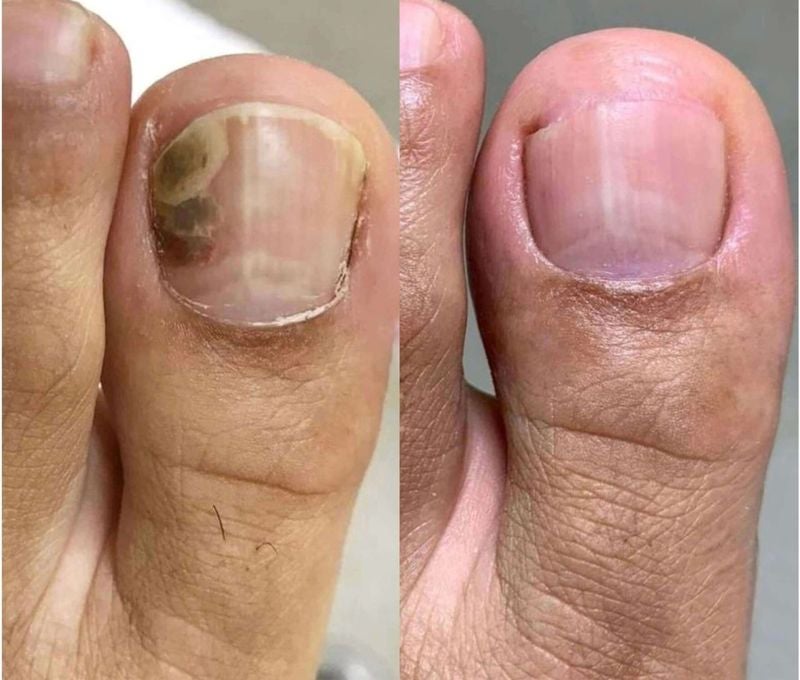
There is a moment many people with nail fungus remember clearly: the first time they realize the nail is no longer “just a little discolored.” It is thicker. Harder to cut. More brittle. Maybe there is an odor. Maybe the skin around it has started to itch, peel or crack.
And that is usually when the hiding begins.
Closed shoes in summer. Socks at someone else’s house. Avoiding the pool. Skipping sandals. Looking down before taking your shoes off to make sure nobody else is looking.
I began investigating this problem after hearing the same question again and again: if pharmacies are full of creams, sprays, liquids and prescription treatments, why do so many people spend years fighting the same fungus?
What started as a simple story about a common infection eventually led me to an integrative physician who had been asking the same question for more than three decades.
The patient who finally made him stop and ask “why?”
Dr. Carter told me about Robert, a 64-year-old retiree who showed up for a family dinner and took his shoes off at the door.
His toenails were thick, yellow and brittle. Robert noticed the doctor looking and immediately turned red.
Later that evening, the two sat outside and Robert admitted he had been trying to deal with the problem for four years.
He had used pharmacy creams. Apple cider vinegar. Tea tree oil. Vicks. Listerine. Eventually, he went to a dermatologist and completed a course of oral terbinafine.
For a while, things looked better.
Then the fungus returned.
What stayed with Dr. Carter was not just the condition of Robert’s nails. It was the embarrassment.
“He was a proud man,” Carter recalled. “The kind who never complains about anything. But when he talked about his feet, he looked defeated.”
What happens when “just an ugly nail” is ignored
Nail fungus often begins quietly. A small yellow or white patch. A rough edge. A nail that suddenly seems harder to trim.
But as the infection becomes more established, the nail can thicken, deform, crumble at the edges and press painfully inside shoes. The surrounding skin may become itchy, flaky or cracked, and the infection can spread to nearby nails or skin.
Why the skin around the nail matters
When the skin around the toes becomes cracked or raw, the concern is no longer only cosmetic. Those breaks can become entry points for bacteria.
- Redness, swelling and tenderness can develop around damaged skin.
- Secondary skin infections can become more serious in people with diabetes, poor circulation or weakened immune systems.
- In severe cases, a bacterial infection that starts through broken skin can spread beyond the foot and become systemic.
Anyone with diabetes, poor circulation, increasing redness, warmth, drainage, fever or rapidly worsening foot symptoms should seek medical care promptly.
For most people, the daily cost is less dramatic but still very real: the shoe that starts hurting, the nail that becomes impossible to cut normally, the itch that keeps returning, and the quiet embarrassment that changes what you wear and where you go.

The overlooked reason Dr. Carter says many treatments disappoint
After Robert’s case, Dr. Carter went back through the research looking for an explanation.
The word he kept finding was biofilm.
Fungal communities can surround themselves with a dense protective matrix that makes them harder to reach and more tolerant to treatment. Dr. Carter began to suspect that this protective layer helped explain why so many people saw partial improvement — only to watch the problem return.
That idea changed the question.
Instead of asking, “What can I put on the nail?” he started asking, “What kind of carrier could help the active compounds stay in contact with — and move through — the environment protecting the fungus?”
His answer came from an unlikely place: something he remembered from childhood.
The detail from his grandmother’s pantry
Dr. Carter grew up in rural Tennessee, where his grandparents used simple home preparations long before a doctor’s office was nearby.
One detail suddenly stood out to him: when his grandmother mixed certain botanical ingredients for stubborn skin and nail problems, she often used an oil base.
Not water.
Oil.
He began experimenting with an oil-based carrier and a combination of four familiar compounds that already had a long history of use in traditional remedies and laboratory research.
According to Carter, the breakthrough was not simply finding a list of “natural ingredients.” It was getting the carrier, concentration and stability right enough for the formula to be practical and consistent.
Then Robert tried it
The first week was not dramatic.
Then Robert called.
The odor was the first thing he noticed.
By the second week, he sent a photo. The brittle edges looked different. Less opaque. Less hard.
By the fourth week, he told Dr. Carter he could trim the worst nails without fighting them the way he had before. His wife noticed the change before he said anything.
Over the following weeks, the visible appearance continued changing as the nails slowly grew.
Then came the phone call Dr. Carter still remembers best.
Robert had gone to the pool with his grandchildren.
He took his flip-flops off and stood barefoot at the edge of the water without thinking about it.
He only realized what he had done when his grandson looked down and said:
For Dr. Carter, that was the moment the project stopped being an experiment and became something he wanted to make available more consistently.
Eight months of formulation later, OilBase-20 was born
Turning a homemade test into a stable product took months.
Dr. Carter eventually connected with Thomas Reed, the research director of an independent laboratory in Tennessee. Together, they worked through suppliers, extraction methods, concentrations and stability issues.
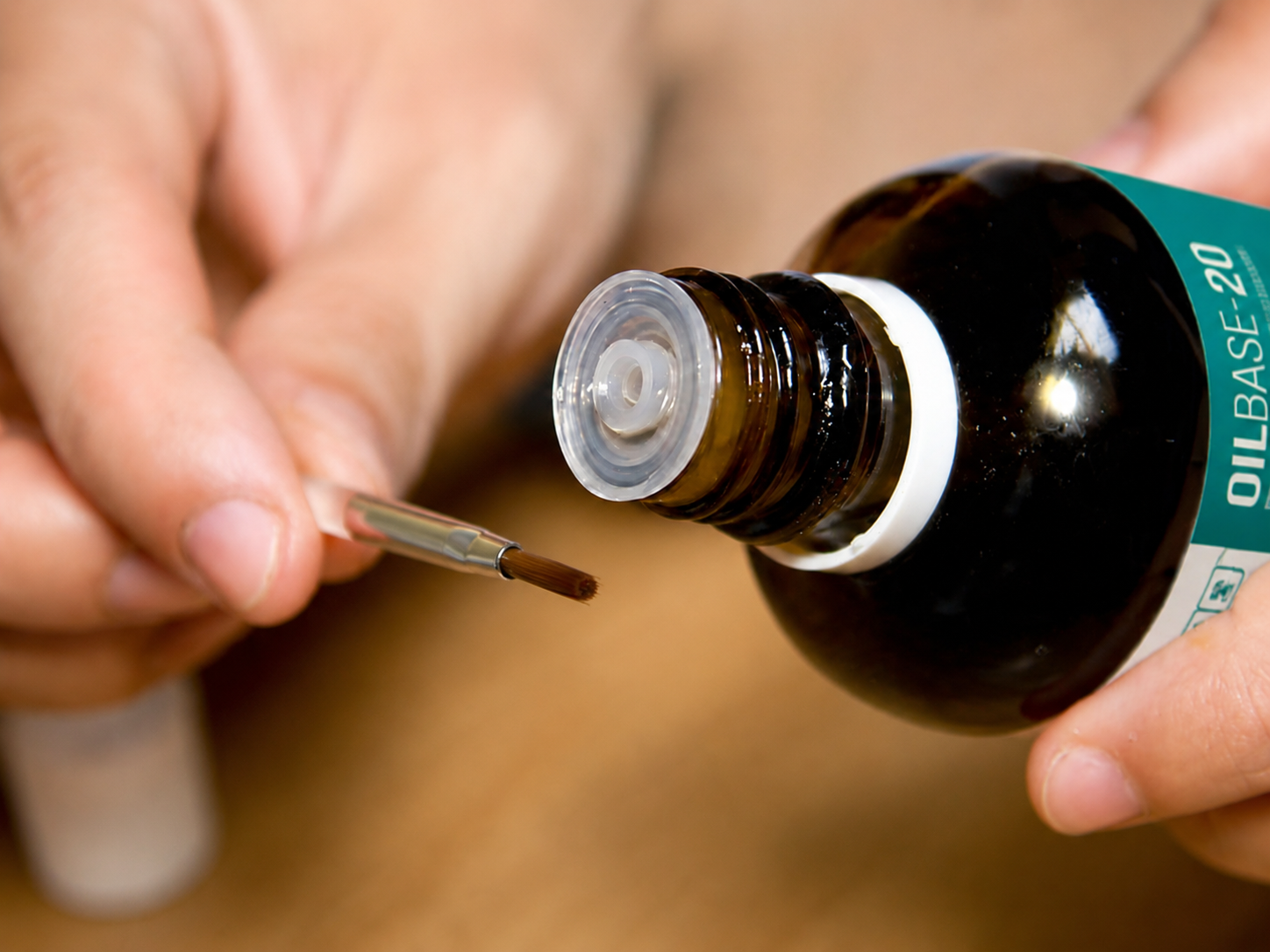
The final product became OilBase-20: an oil-based topical formula applied directly to the nail with a brush.
What makes the routine different
- Oil-based topical application rather than a messy cream routine.
- Brush-on format designed to take only seconds.
- Four-compound botanical blend: apple cider vinegar, oregano extract, garlic and olive leaf.
- No rubbing, wrapping or complicated preparation.
- Designed for consistent daily use while the nail grows out.
Why consistency matters more than a “7-day miracle”
Nails grow slowly.
That matters because even when the environment around the nail begins changing, the visible damaged nail still has to grow forward and be replaced.
That is why the strongest version of this story is not “wake up tomorrow with a perfect nail.” It is the opposite: use a simple routine consistently long enough for healthier-looking growth to become visible.
For people who have spent years bouncing between creams, home remedies and prescriptions, that distinction can be important.
Visit the official page to check current availability, package options and details about the OilBase-20 daily routine.
Check Availability >>What people say they notice first
Across the experiences shared with Dr. Carter, the first visible sign was not always dramatic.
Some people noticed odor changing first. Others noticed the edges becoming easier to trim. Others said someone close to them noticed the difference before they did.
One patient who had avoided sandals for years eventually sent a photo of bare feet on a beach chair without writing a single word.
Another older patient who had been embarrassed to visit a pedicure finally went back — and what moved her most was that nobody reacted to her feet at all. She was treated like any other customer.
For people who have hidden their feet for years, that kind of ordinary moment can feel anything but ordinary.
And the cost of waiting is not only money
People with stubborn nail fungus often calculate the cost in creams, prescriptions and appointments.
But the bigger cost is often harder to see.
The beach you skipped.
The barbecue where you kept your socks on.
The sandals still sitting in the closet.
The moment your granddaughter asked why one nail looked different.
The irritation inside a shoe you simply learned to tolerate.
That is why the OilBase-20 story resonates with people who have already tried “one more thing” several times before.
Visit the official page to see the recommended usage period, current package options and the 60-day satisfaction guarantee described by the manufacturer.
Check Availability >>